








Create a contemplative garden for hotter, drier summers
Publié le 22/09/2026
A contemplative garden offers more than visual beauty. It gives you a place to pause, notice seasonal change, and restore attention after a demanding day. As summers become hotter and drier, that restorative space needs a new kind of care: planting for endurance, using water thoughtfully, and allowing the garden to follow a calmer, more natural rhythm. With practical choices, you can create a garden that remains welcoming through heat, drought, and changing rainfall patterns.
Start with a garden design that welcomes heat and stillness
A resilient contemplative garden does not need to look sparse or severe. Its structure can be generous, with shade, texture, fragrance, and places to sit, while its planting is adapted to dry conditions. Begin by observing where sun falls during the longest summer days, where rainwater gathers, and which areas dry out first. These observations help you place plants where they are most likely to thrive.
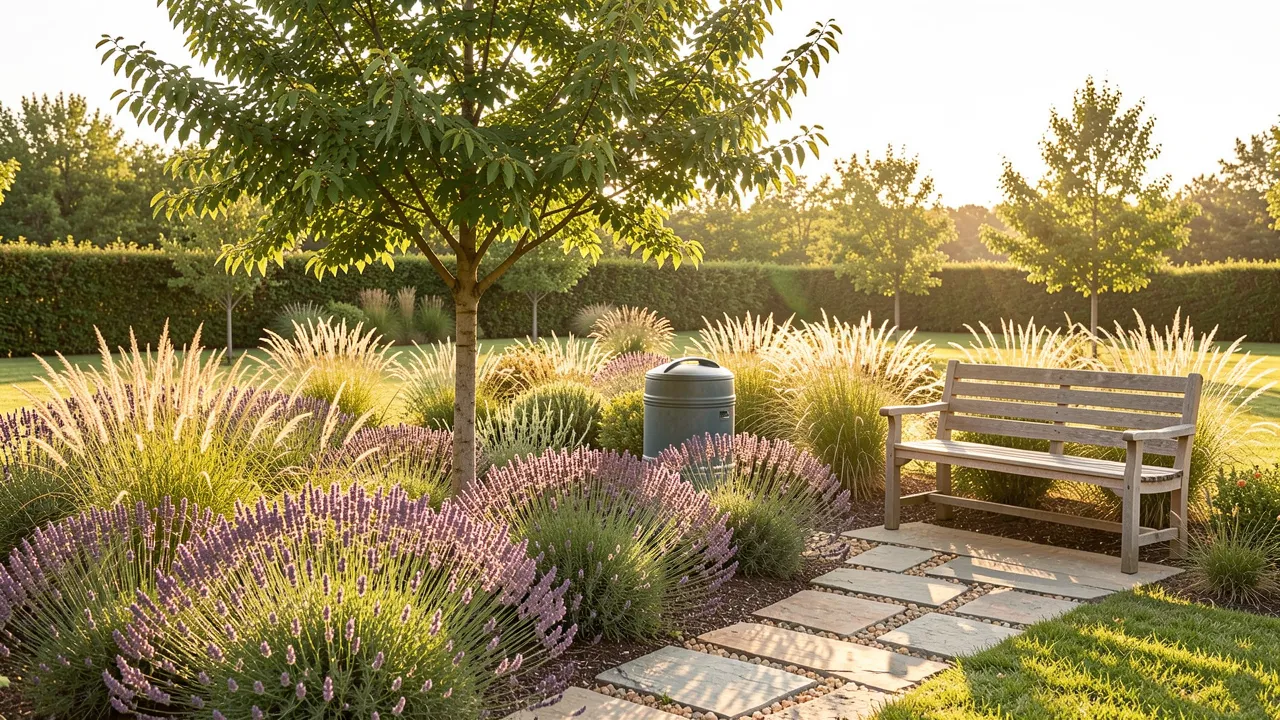
Create a simple route through the space, perhaps using gravel, permeable paving, or mulch paths. A bench beneath a small tree, a quiet corner near aromatic planting, or a view towards grasses moving in the breeze can encourage regular moments of reflection. Keep the layout uncluttered so that maintenance remains manageable during periods of heat.
Choose materials that do not intensify summer temperatures. Pale gravel can reflect glare, while dark stone may store heat. Natural mulches, timber edges, and locally sourced stone tend to feel softer and can support a more balanced microclimate. Mindful garden design means making room for both people and living systems.
Choose plants and trees that cope with longer dry spells
Plant selection has the greatest influence on how much water and intervention your garden will require. Focus on plants suited to your soil, exposure, and local winter temperatures, rather than relying only on labels that describe a plant as drought tolerant. A plant may withstand dry weather once established but still need regular watering during its first two summers.
For practical guidance on selecting plants, managing lawns, and adapting outdoor spaces to warmer weather, these gardening tips can support your planning. Gardens facing heat benefit from deep-rooted perennials, drought-tolerant shrubs, and trees that provide filtered shade. Thoughtful planting also reduces bare soil, which loses moisture rapidly under strong sun. A layered garden with trees, shrubs, ground cover, and herbaceous plants creates cooler conditions close to the ground.
Trees can provide shade without demanding constant irrigation
Small and medium-sized trees are especially valuable in a climate-resilient garden. Their shade protects seating areas, lowers soil temperatures, and gives birds shelter during hot weather. Consider species suited to your region, such as field maple, serviceberry, Mediterranean oak varieties in mild climates, or drought-adapted native trees recommended by local nurseries.
Avoid planting a thirsty tree close to a house, patio, or existing plants that need the same moisture. Give young trees a wide watering basin and apply a thick layer of mulch around, but not touching, the trunk. Water deeply and less often to encourage roots to grow downwards.
Perennials and shrubs can bring colour with less water
Lavender, salvias, yarrow, sedum, rosemary, euphorbia, nepeta, and many ornamental grasses can perform well in sunny, well-drained gardens. In heavier soils, improve drainage before planting species that dislike winter wet. For partial shade, hardy geraniums, hellebores, epimediums, and some ferns may be more appropriate, depending on local moisture levels.
Group plants with similar water needs together. This makes irrigation more precise and avoids overwatering plants that prefer dry ground. Right plant, right place is a practical principle that saves time as well as water.
Use water wisely and protect the soil from heat
Water-wise gardening is not about withholding water until plants fail. It means directing water where it has the greatest effect and helping soil retain what it receives. A garden with healthy soil needs less emergency watering than one with compacted, exposed ground.
Water early in the morning, when evaporation is lower and foliage can dry during the day. Aim at the root zone rather than spraying leaves. Soaker hoses and drip irrigation are useful for borders, hedges, and young trees because they deliver water slowly and reduce waste.
Mulch is one of the most effective tools available to you. Apply composted bark, leaf mould, wood chips, or garden compost in a layer around 5 to 8 centimetres deep. Keep a clear ring around stems and crowns to reduce the risk of rot. Mulch limits evaporation, suppresses weeds, and gradually improves soil structure.
Collect rainwater where possible. Even a modest water butt can provide useful reserves for containers, seedlings, and newly planted specimens. During extended drought, prioritise trees, shrubs planted within the last two years, and productive plants. Established drought-adapted perennials can usually tolerate a period of reduced watering better than newly installed planting.
Let lower-impact maintenance support seasonal awareness
A contemplative garden benefits from gentler routines. Instead of treating every fallen leaf, dry stem, or patch of long grass as a problem, consider what it offers the garden. Seed heads feed birds, hollow stems shelter insects, and leaf litter can become valuable mulch.
Mow lawns less frequently during dry periods and raise the mower blade. Longer grass shades the soil and is more likely to stay green than a tightly clipped lawn. You might allow one area to grow into a small meadow patch, planted with drought-tolerant wildflowers suited to your locality.
Pruning should also adapt to weather. Avoid hard pruning during intense heat, when plants are already under stress. Remove dead, damaged, or diseased material, but postpone major reshaping until cooler conditions return. Rather than burning green waste, chop suitable material for mulch, compost it, or use it to create habitat piles away from main seating areas.
A resilient garden can remain a place of calm
As you plan your garden, focus on changes that strengthen both its atmosphere and its ability to cope with dry summers:
-
Build shade gradually with suitable trees. A young tree may seem modest at first, yet it can transform a hot garden over time. Protect it during establishment with deep watering, mulch, and enough space for roots to spread.
-
Cover bare ground with living plants and organic mulch. Ground cover and mulch reduce moisture loss, moderate soil temperature, and lessen the need for repeated weeding during the hottest weeks.
-
Choose a smaller, stronger plant palette. Repeating reliable heat-resistant plants often creates a more peaceful visual effect than maintaining many thirsty species with different needs.
-
Treat water as a seasonal resource. Collect rainwater, water slowly at the roots, and direct your limited supply towards young plants and valuable specimens first.
-
Leave room for natural cycles. Dry seed heads, longer grass, and decaying leaves can support wildlife while giving the garden a quieter, less controlled character.
A garden designed for hotter summers can still feel abundant, fragrant, and deeply personal. By working with sunlight, soil, water, and seasonal change, you create an outdoor refuge that asks less of you during drought and gives more back throughout the year.