








How to practice spiritual solitude at home
Publié le 01/10/2026
Spiritual solitude at home is not simply time spent alone. It is a deliberate practice of stepping back from noise, demands and distraction so that you can listen more deeply to God, your conscience and the movements of your inner life. A quiet home routine can become a place of prayer, restoration and spiritual clarity, even when you have limited space or a busy household.
Spiritual solitude begins with a clear purpose
Before setting aside time, consider why you are seeking solitude. You may feel spiritually tired, uncertain about a decision, drawn toward prayer or in need of a calmer rhythm. Naming your intention gives your practice direction without turning it into another task to complete.
Your purpose can be simple: “I want to be present before God for ten minutes.” You may also use solitude to read Scripture slowly, examine your heart, write in a journal or sit quietly without trying to produce an answer.
Solitude is not emptiness for its own sake. It creates room for attention. Rather than filling every silent moment with a podcast, messages or background television, you allow yourself to notice what is already present: gratitude, worry, longing, resistance or peace.
Create a small space that invites stillness
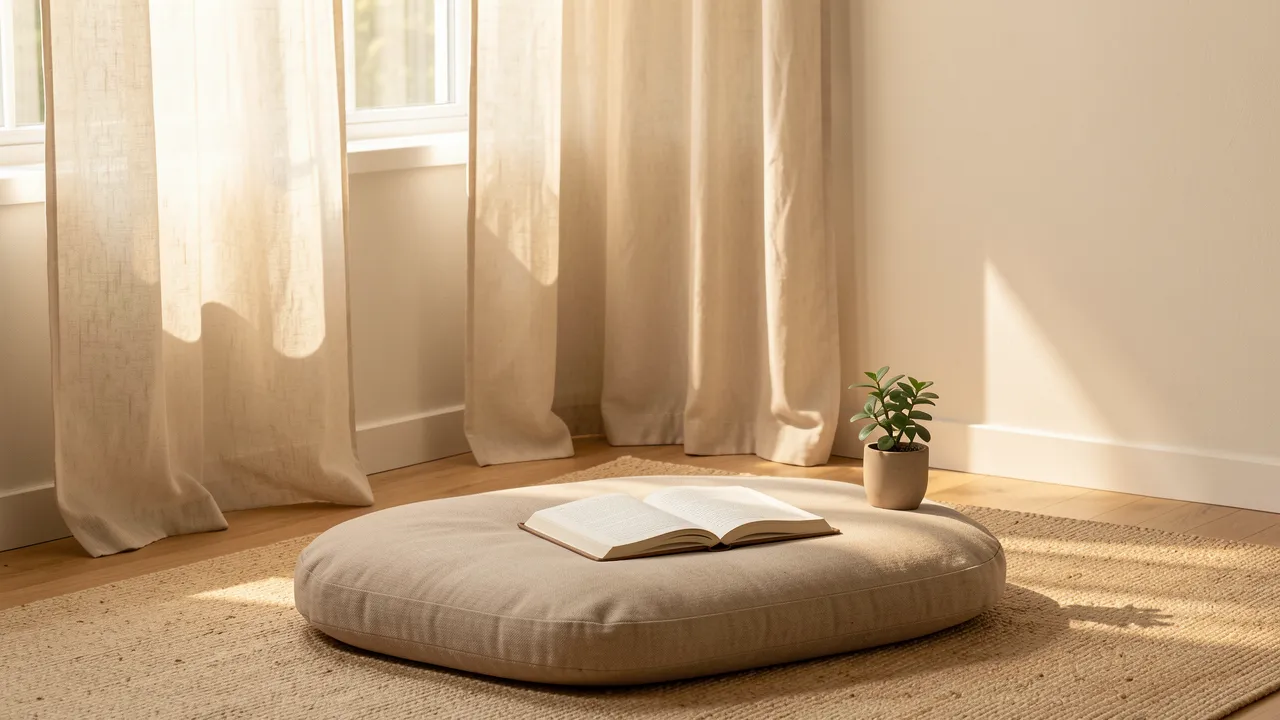
You do not need a separate prayer room to practise spiritual solitude. A chair near a window, one end of the sofa, a corner of a bedroom or a place at the kitchen table can become a regular place of retreat. What matters most is consistency and a sense of welcome.
Keep the space uncomplicated. You might place a Bible, notebook, candle, cross, meaningful image or a small plant nearby. These objects are not requirements, but they can gently signal that this time is different from ordinary activity.
If your home is busy, choose a realistic moment. Early morning may offer quiet before others wake. A lunchtime pause, a walk around the garden or a few minutes before bed can work equally well. Start with ten minutes rather than aiming for an hour. A modest, faithful rhythm is more helpful than an ambitious routine that quickly disappears.
For prayerful reading, you may find guidance in Finding Inspiration in the Psalms: A Reflective Journey. The Psalms give honest language for joy, fear, disappointment and trust, making them a fitting companion when your own words feel limited.
Let household boundaries support your practice
If you live with others, explain your plan with warmth and clarity. You might say that you are taking fifteen minutes of quiet prayer and would appreciate privacy unless there is an urgent need. Headphones, a closed door or a simple note can also help establish this boundary.
Parents and carers may need to adapt. Spiritual solitude can happen while a child naps, during a school run, in the bath after the household is asleep or while preparing a meal in silence. The practice does not require ideal conditions. It asks for honest attention within the conditions you have.
Use simple practices instead of chasing perfect silence
Many people find that silence initially feels uncomfortable. Thoughts may become louder, unfinished work may return to mind and physical restlessness may appear. None of this means you are failing. It is often part of becoming aware of what you usually move past too quickly.
Begin with a gentle structure:
- Sit comfortably and take several unhurried breaths.
- Offer a short prayer, such as, “God, I am here.”
- Read a few verses of Scripture or repeat a brief phrase.
- Sit quietly, returning to the phrase when your mind wanders.
- End by giving thanks or writing one sentence in a journal.
You can use a prayer word such as “peace,” “mercy” or “Lord.” Say it slowly with your breathing. When distractions arise, acknowledge them without argument, then return to the word. The goal is not to remove every thought. The goal is to practise returning.
A journal can be especially useful after quiet prayer. Write what surfaced, what you are carrying and what you sense you need to release. Keep the tone truthful rather than polished. You are not composing a spiritual performance.
Allow Scripture and prayer to shape your inner life
Spiritual solitude is strengthened when it is connected to a living relationship with God. Read a short passage slowly, perhaps three times. Notice a word or sentence that stays with you. Ask what it may be inviting you to receive, question or practise.
Prayer can also include intercession. Bring a person, community or concern before God, then rest without trying to control the outcome. This balances inward reflection with care for others.
For a wider perspective on faith as a source of steadiness and growth, read Christian faith for personal growth, balance and modern well-being. Solitude can support a more balanced daily life when it leads to greater patience, compassion and attentiveness beyond your quiet corner.
Be patient with dry or distracted days
Some periods of solitude will feel peaceful. Others may feel flat, hurried or emotionally difficult. Avoid measuring the value of prayer by how uplifting it feels. Showing up with sincerity can be meaningful even when no clear insight arrives.
If anxiety becomes overwhelming, choose a more grounded practice. Keep your eyes open, hold a warm drink, pray while walking or focus on a familiar Psalm. You may also speak with a trusted faith leader or qualified professional when deeper concerns need support.
Let your home practice continue into daily life
Spiritual solitude becomes more fruitful when it influences ordinary moments. Carry one phrase from prayer into your day. Pause before responding sharply. Eat one meal without a screen. Take a minute of silence before opening your inbox. These small choices extend your practice without making your whole life feel rigid.
Keep these points in mind as you build a sustainable rhythm:
- Choose a regular time and a simple place at home.
- Begin with ten minutes and increase only if it feels sustainable.
- Use Scripture, a prayer word or journaling as gentle anchors.
- Expect distraction, then return calmly to your intention.
- Let solitude encourage kinder, more attentive daily habits.
A gentle path toward deeper spiritual quiet
Practising spiritual solitude at home offers a way to meet God without needing elaborate arrangements or long periods away. Your home can hold a quiet threshold, a place where you pause, listen and become more available to grace. With a simple routine and patient expectations, solitude can become a steady source of spiritual renewal.